
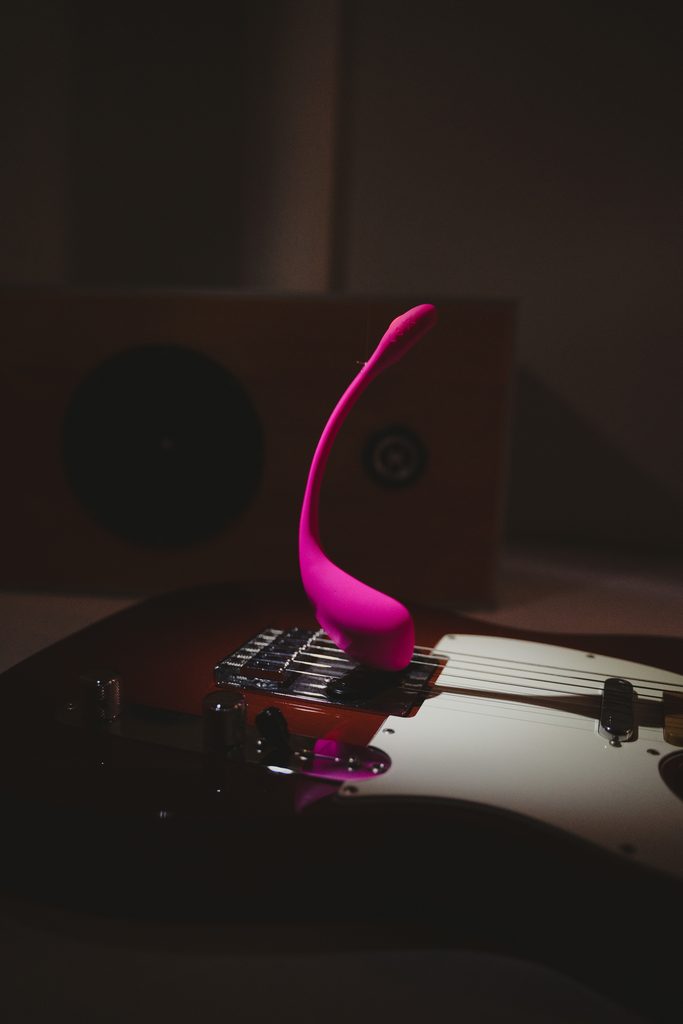



TurnOn is a hybrid work, suspended between sound installation and self-generating performance. The work consists of a variable number of sex toys arranged in space as actual performers. Controlled via Bluetooth connection, the devices interact with one another sonically and autonomously, generating a dynamic and unpredictable texture.
The use of the well-known Lovense Lush, a remotely controlled sex toy, carries with it a series of cultural preconceptions. The work aims to decontextualize an object inevitably associated with its original field of use, shifting it into a performative and musical dimension. The “human” component intrinsically associated with this type of device is deliberately eclipsed: the act of control, a fundamental element of these products, is concealed and sublimated within an algorithmic system. The object thus loses its primary function and is transformed into a sound source, an autonomous performer, and a vibrating body within space.
TurnOn can consist of a variable number of devices (from 2 to 8), preferably arranged in a symmetrical configuration. Each vibrator is suspended above a guitar pickup capable of capturing its vibrations and converting them into an audio signal. The sound is reproduced through a loudspeaker positioned exactly where the device is located, allowing for clear spatial localization. Each element therefore possesses its own “voice” and acoustic presence. Originally designed to be controlled via a smartphone application over Bluetooth, the devices are integrated into a generative system by hacking the connection. A Max/MSP patch manages the messages and connections between the computer and the devices, sending each device encoded strings relating to vibration intensity and duration. The patch is designed to generate musical interactions based on elementary parameters: gesture, texture, silence, iteration, contrast, individually organized for each unit. The result is a complex and layered system: the behavior of a single vibrator may harmonize with the others or enter into sharp contrast, producing tensions, consonances, interference, and pauses.
The interaction between algorithmic autonomy and spatial arrangement creates performance in constant redefinition.
ph. Carlo Sgarzi